- Duration
- First visit plus 2 to 4 weeks
- Frequency
- Clinic visits 1 to 2 times per week plus a short home plan most days
- Equipment
- Comfortable clothing, symptom notes, any prior imaging
- 1.Clarify goals and timelineWe start with your main concern. This may include posture changes, fatigue, pain, breathing comfort, or confidence with sports and daily activity. We also review when you first noticed changes and what has changed recently.
- 2.Screen for red flags and nerve symptomsWe check for symptoms that require urgent medical evaluation. We also screen for numbness, weakness, balance changes, bowel or bladder changes, and walking tolerance.
- 3.Posture and movement screeningWe look at shoulder height, rib prominence, pelvis balance, and how you move. This helps us see whether the pattern looks structural, functional, or mixed and whether referral is appropriate.
- 4.Decide if imaging or referral is neededA screening can guide next steps, but curve measurement is typically done with imaging. If your history or exam suggests progression risk, we help you coordinate the appropriate referral path for imaging and specialist input.
- 5.Set your baseline so progress is trackableWe document what matters. This often includes pain location and intensity, fatigue, sleep comfort, breathing comfort, sitting and standing tolerance, and what tasks feel harder than normal. We use consistent measures so you are not guessing later.
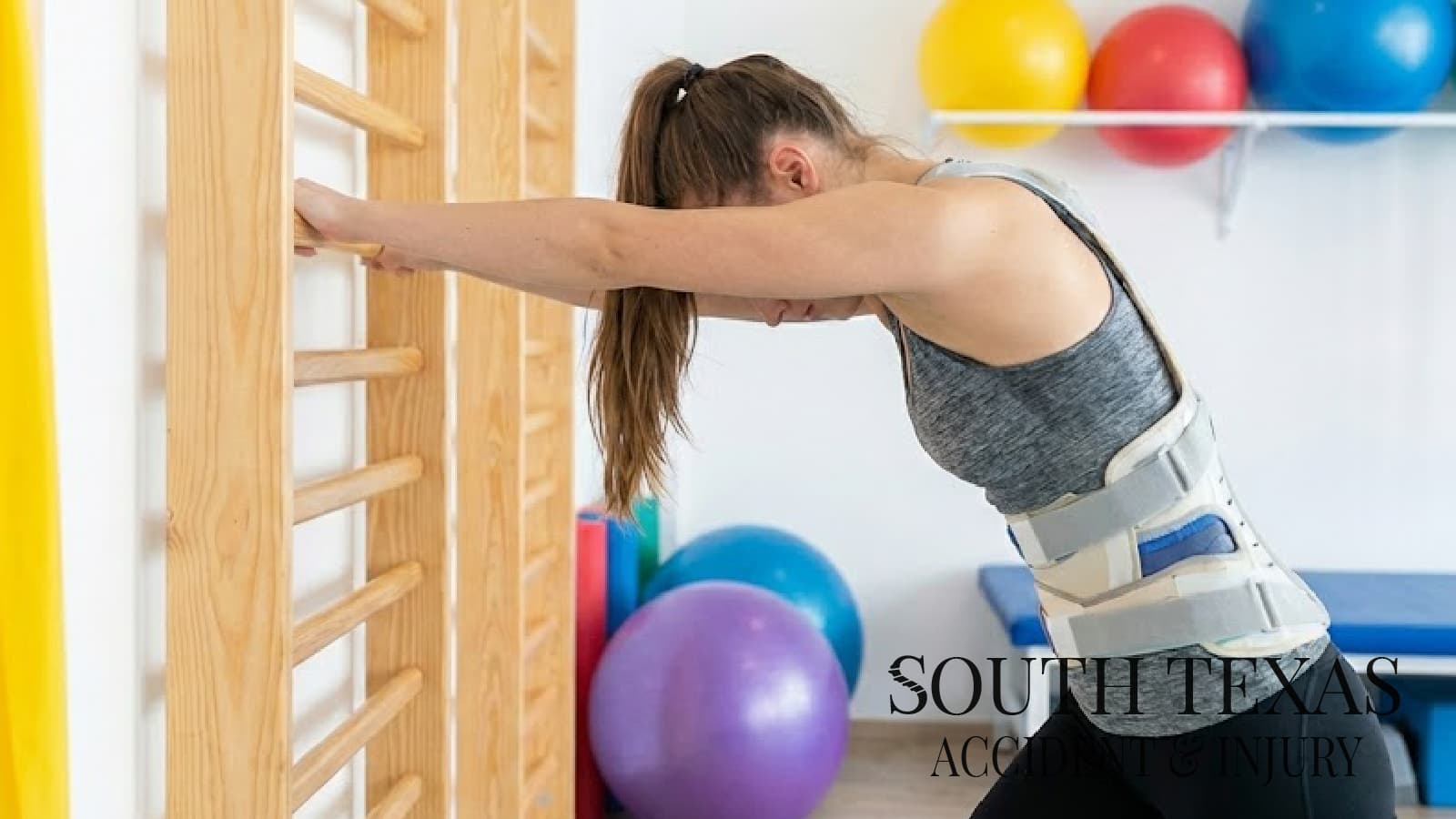
- 6.Schroth-based physical therapy evaluationWe identify your curve pattern and train the first set of scoliosis-specific correction strategies. This usually includes posture control, breathing mechanics, and strength work that matches your daily life and activity demands.
- 7.Build a short home routine that you can actually followWe do not hand you a long list that you never use. We pick a small set of exercises you can do consistently. Most patients do best with a short plan they can repeat.
- 8.Structural chiropractic evaluation for mobility and comfort barriersWe assess joint mobility, stiffness patterns, and asymmetrical loading that can limit movement and make rehab harder. The goal is improved comfort and mobility so rehab is easier to perform and easier to maintain.
- 9.Targeted care that supports the rehab planStructural care is used to support movement quality and comfort. It is not positioned as a guaranteed method to straighten a curve. It is used to reduce stiffness, improve motion, and support your ability to train.
- 10.Integrate your corrections into real lifeWe practice corrections in daily positions like sitting, standing, walking, lifting, and sports-specific stances when relevant. This is where the plan becomes practical instead of theoretical.
Educational note: This page is general information and is not a diagnosis or a promise of results. Scoliosis care depends on age, symptoms, curve type, and growth stage. If symptoms are severe or worsening, seek urgent medical care.
Scoliosis explained simply
Scoliosis means the spine curves sideways and the spine can also rotate. Some people never feel pain and only notice posture changes. Others notice fatigue, stiffness, or discomfort with sitting, standing, sports, or work. Most families want clarity. They want to know what is normal to watch and what a conservative plan can look like.
Good starting references include the Scoliosis Research Society and NIH MedlinePlus.
Who scoliosis can affect
- Kids and teens: curves are often noticed during growth spurts. Families may notice uneven shoulders, rib prominence, or clothes fitting unevenly.
- Adults: some have a curve from adolescence. Others develop degenerative scoliosis later in life alongside stiffness and arthritis changes.
- All ages: symptoms vary widely. Some people have no pain. Others feel fatigue, stiffness, or activity limits.
Common signs families notice
These signs are not a diagnosis, but they are common reasons people seek a screening.
- One shoulder higher than the other
- Uneven waistline or hips
- One shoulder blade more prominent
- Ribs that look more prominent on one side when bending forward
- Clothes hanging unevenly
- Back fatigue or discomfort with prolonged sitting or standing, especially in adults
How scoliosis is evaluated
A screening usually starts with posture and movement checks. If the pattern suggests scoliosis or progression risk, a medical provider may recommend imaging. Imaging helps measure the curve and guide decisions.
Many families also want to know what to track. The best tracking targets are the ones that affect daily life. This can include sitting tolerance, standing tolerance, sleep comfort, breathing comfort, and confidence with sports or work tasks.
What conservative scoliosis care can include
Conservative management depends on age, curve size, symptoms, and whether a teen is still growing. Common pathways include observation, bracing in some growing teens, and surgery in select cases.
Observation and monitoring
For smaller curves, clinicians may recommend monitoring. The goal is to watch for meaningful change and respond early if progression is suspected. Monitoring is especially important during growth spurts.
Bracing for growing teens (case by case)
Bracing is usually coordinated through a specialist and a certified orthotist when a teen is still growing. One of the best-known bracing studies is the BRAIST trial published in the New England Journal of Medicine.
Our approach: a duo program
Many patients need two things at the same time. They want better daily function now, and they want a plan that is organized enough to track change over time. In our clinic, scoliosis care is built as a duo program. We combine Schroth-based physical therapy with structural chiropractic support. These are not competing approaches. They are complementary roles.
Part 1: Schroth-based physical therapy
Schroth-based therapy is a scoliosis-specific exercise approach. It focuses on posture control, breathing mechanics, and strength. It is designed to match the pattern of the curve and the real demands of daily life. For most families, the practical goal is improved control and improved confidence. Johns Hopkins provides a readable overview of the Schroth Method. Benefits patients commonly care about include
- Improved posture awareness and control in sitting and standing
- Improved endurance for school, work, and sports
- Better breathing mechanics and rib expansion awareness for some patients
- Less fear because the plan is clear and repeatable
- A home routine that is short enough to stay consistent
Part 2: Structural chiropractic support
Structural chiropractic care focuses on neuromuscular re-education and reduction of pain. In a scoliosis plan, this lane supports mobility, reduces stiffness, and helps you move better so the rehab work is easier to perform. This can help with
- Stiffness that makes posture work feel impossible
- Asymmetrical tightness that triggers fatigue with prolonged sitting or standing
- Movement restrictions that make exercise form harder to maintain
- Comfort barriers that reduce consistency with home rehab
How we track progress without guessing
Progress should be measurable and understandable. We track functional markers and symptoms that matter to daily life. This can include sitting tolerance, standing tolerance, sleep comfort, activity confidence, and symptom patterns over time. If symptoms worsen or new neurologic signs appear, the plan should change and referral may be appropriate.
Red flags: when to seek urgent medical evaluation
Seek urgent medical evaluation if you have severe symptoms or symptoms that are clearly worsening.
- New or worsening weakness, numbness, or trouble walking
- Loss of bowel or bladder control
- Severe pain that escalates quickly or does not improve with rest
- Fever with back pain, unexplained weight loss, or night pain that is getting worse
FAQ
Can scoliosis cause pain?
It can, but not always. Some people have no pain and only notice posture changes. Others notice fatigue, stiffness, or discomfort, especially with prolonged sitting or standing.
Do I need an X-ray to know if I have scoliosis?
A screening can suggest scoliosis, but imaging is commonly used to measure the curve and guide decisions. A clinician can help you decide whether imaging is appropriate based on age, symptoms, and risk factors.
Can exercises help?
Scoliosis-specific exercise programs can help improve posture control, strength, and function for many patients. The goal is often better endurance and better control, not perfection.
What does "duo program" mean in practice?
It means you get a plan that includes active scoliosis-specific rehab plus care that supports mobility and comfort barriers. The goal is to make your rehab more consistent and more usable in real life.
How this fits what we do at South Texas Accident & Injury
If you are in the Rio Grande Valley and you want a clear, conservative scoliosis plan, we treat this like a two-phase program. First we build stability with intensive rehab and neuromuscular re-education. Then, once you hit a new baseline, we transition you into a lower-visit hybrid plan that keeps progress moving without living in the clinic.
Phase 1: the first quarter (intensive rehab + neuromuscular re-education)
In the first phase, our job is to reduce confusion and create control. We start with a calm screening and a simple explanation of what we are seeing. When appropriate, we build a duo program that combines Schroth-based physical therapy with structural chiropractic support.
- Schroth-based PT: breathing mechanics, postural awareness, and pattern-specific strength to improve control and endurance.
- Structural chiropractic support: comfort-focused mobility and joint support to help you move better while you train new patterns.
- Tracking: simple baseline measures so you can tell what is changing over time (symptoms, fatigue, activity tolerance, and posture checkpoints).
Phase 2: stabilize the baseline, then go hybrid (fewer visits + focused telehealth)
Once you are more stable and the plan is working, we shift to a hybrid model. You come in less often for targeted re-checks and hands-on support as needed, and we use focused telehealth sessions for coaching, form correction, and progression of your home program. The goal is consistency and long-term follow-through, not endless appointments.
If bracing evaluation or specialist input is appropriate, we help coordinate that referral pathway. If symptoms are severe or worsening, seek urgent medical care first.
Schedule a scoliosis screening
Disclaimer
We provide chiropractic and rehabilitation services within Texas scope and guidelines. This page is educational information only and is not a medical diagnosis. If symptoms are severe or worsening, seek urgent medical care.
- Scoliosis Research Society (SRS) — Patient education on scoliosis
- AAOS OrthoInfo — Scoliosis in children and adolescents (screening, imaging, options)
- NIH MedlinePlus — Scoliosis overview (plain-language basics)
- Cleveland Clinic — Scoliosis overview (symptoms, diagnosis, treatment)
- SOSORT — International society for conservative scoliosis treatment (PSSE information)
- Schreiber et al. (2015) — Randomized trial: Schroth exercises added to standard care in AIS (Scoliosis and Spinal Disorders)
- Johns Hopkins Medicine — Schroth Method for scoliosis (physical therapy approach)
- BrAIST Trial (NEJM) — Bracing reduces progression risk in adolescent idiopathic scoliosis
- Woggon et al. (2013) — CLEAR protocol chiropractic approach (case series; Journal of Chiropractic Medicine, PubMed Central)